Thursday, 2 September 2010

Connection

 
In 2007 Dave Mearns and Mick Cooper wrote a book called ‘Relational Depth’ a minute part of which covered Mearn’s counselling work with the client ‘Dominic’. One sentence between Means and Dominic went like this:

“Dom, be here, be here drunk, but don't play fucking games with me.”

and small bomb went of in the Person Centred counselling world. You can read the rationale for the opposition to this way of being here:

Objections were founded in theory and as such are sound and worthy of discussion but in the midst of the debate was the unspoken, something indefinable, and for me it came down to issues of who counsellors often are, who clients often are, the ways in which we define ourselves and most importantly, the terror that many counsellors have of actual connection. Connection is the primary concern of the book and the work of the counsellor.

In reply to my previous piece Amanda commented:
I found myself absolutely tongue tied when I spoke to her for the first time after the event. We do not share a spiritual path, but even if it were so I do not know what I could have said to her. I am not a mother, I cannot begin to know the pain of losing a child. This is one area that troubles me as I consider continuing on the path to fully involved pagan clergy... will I ever be able to find the "language of mystery" to help with this very particular kind of grief with no knowledge of that relationship myself?
which touches on an important aspect of counsellor or clergy training: how do we empathise with people who have had an experience that we have not?

The pat answer is that we all share similar experiences and can use them to empathise with the experience of the client. There’s some truth in this but the existence of specialist support groups speaks to the importance of the truly shared experience. People can communicate in intimate shorthand without having to explain or pull their punches for the sake of the listener, a shared journey with close companions, people who don’t need to be told everything for there to be a sense of kinship.

Connection has been categorised and simplified, codified and reduced to a technique. “You can empathise with a woman who’s lost her baby because your dog died.” Not really. One of my peers wanted to prove that online counselling was able to provide Buber’s I-Thou relationship between client and counsellor. That this person wanted to prove anything in research was a measure of her need. Despite discussions she went off and did the research which, astonishingly, showed that an I-Thou relationship was possible in online counselling.

Buber spoke of moments of I-Thou relationship, brief (but timeless) instances beyond speech touching the realm of mystery; fragile, unrehearsed, attuned to agape. This goes beyond empathy into the realms of perfect love and perfect trust, connection rather than relationship, existential meaning-making and life purpose.

Buber is wonderful to read: dense, rich and complicated it takes time to absorb his wisdom. There are many other authors who build on his work and create their own whose writing is accessible and not in the least mystical without losing any gravitas or wisdom. I entirely recommend Working at Relational Depth by Dave Mearns and Mick Cooper which brings together the philosophy and research into connection of many of the most important modern voices on the subject – and builds beautifully on their foundations. Try anything by Peggy Natiello, Brian Thorne and Irvin Yalom.

Immerse yourself in their writing, try feelings on for size, respectfully experiment with your friends – see how it is to truly attempt to move into their frame of reference, see what, if anything happens. But here’s the magic ingredient: expect nothing to happen.

A very respected Pagan leader recently expressed his disgust with someone we’ve known for many years: “I've tried for years to make her less miserable. I don’t care any more.” How awful of this woman to not do what he wants. Who knows what she needs to do, or why? One thing is certain, she doesn’t exist for people to change, to make her easier to be around, to heal and Paganism is veritably heaving up with healers. Physician, heal thyself. When I’m made queen of the world all counsellors and clergy shall be made to repeat this every month, and best it be when the moon is full: “I am attempting to heal myself when I work with clients.” For better or worse.

If we have an agenda it can only come down to “Let me do no harm and let me be truly of service to this individual.” Not to heal them. Not to make them feel better. Not to stop their pain. Not to make contact or do the I-Thou thing. But to be available and worthy of contact.

So much of the time I don’t know what I’m doing with clients and ironically if I can be comfortable in the not-knowing, trusting the process, then I know something is going well.




Saturday, 28 August 2010

The Power of Language

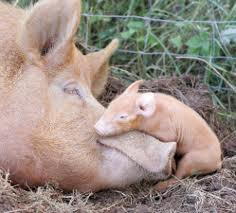
Babies are strong and can tolerate conditions that adults can’t. Whilst there’re excellent evolutionary reasons for newborns of all species to be resilient it’s also humbling and touching to hear about the struggle for life and potent maternal instinct of James and Kate Ogg in Australia.

These kinds of events are hailed as miracles in some cultures and such is the relief and gratefulness of the parents and loved ones that it’s entirely understandable. Then believers come along and perceive it all as an act of their god, something that makes many classical theologians depressed: if their god is wholly simple – that is, unaffected and beyond all we can understand – then how would their god get involved in that world? If that involvement occurs then their god is no longer godlike.

Protestant theology, which perceives the bible as their god and their god as intensely interested in them, disagrees which in fact bears a close relationship to how many Pagans function. Many of us have a personal relationship with our gods and they with us. So what might Paganisms response to the powerful evidence of one child’s will to survive be?

Personally, I don’t believe in miracles but this doesn’t prevent me from experiencing intense interest or from being very moved by James’ struggle and becoming even more convinced of the power of physical touch and physical connection to change destiny. I’m aware of only a few Pagan responses to this story and they’re all based in wonder and joy. In some of the replies there’s just a hint – which I, all good midwives, good neonatal nurses and many mothers share – of  “This goes a long way towards further proving that skin-to-skin contact between newborn and mother has enormous consequences.”

(The link works in formatting but not in fact! Take a look at

http://onlinelibrary.wiley.com/o/cochrane/clsysrev/articles/CD003519/frame.html   

Maternal instinct is frequently correct and is sometimes the difference between life and death. Pagans seem to know that as a scientific and beautiful reality rather than as a miracle.

One or two Pagan responses have given me pause. I doubt any would say they believe in miracles, not one has any ill intent behind their comments, none would dream of using this event to proselytise or judge. But they use a language of poetry which bestows numen and a particular weight to what they say. Just as we respond to specialised medical language or the language of advertising so we respond to the language of ‘Karmic connection’  ‘ a holy gift’ ‘the quiet voice that knows truth’ and so on. That’s why the language of ritual is different from mundane language and it’s why I’ve stopped using what I perceive to be the language of mystery outside of ritual.

Because in this case it makes the mothers of dead babies failures. They didn’t have the karmic connection. Why didn’t the Goddess give them the gift of a live child? Despite hours of skin-to-skin contact and yearning and communication they didn’t bring their dead child back to life, perhaps because they didn’t listen hard enough for or were unworthy of the voice of truth. That is clearly not the intent of people who have used the language of mystery to communicate their feelings and it can’t help but have that effect.

Every mother and father that has had a premature or full term stillbirth or neonatal death will be pitched back into stinging grief by this story. Did they do
enough? Did their child have a chance that they didn’t take? Did they put too much trust in their medical team? How were they deficient? There’s no mother of a dead or disabled child who at some point doesn’t ask herself this, even if she knows that the answer is an unambiguous no. It’s only very recently that mothers were allowed to have anything to do with their dead baby. Imagine our mothers, grandmothers, other older women now wondering if they’d only been allowed to hold their baby, what if, what if. Lets not add things to feel dreadful about.

The kind of attention to pain which concerns itself with unknowing and doubt, semi-consciousness and the unconscious, can be approached most effectively through careful and specialised use of the language of mystery, sometimes through formal ritual and sometimes in less formal shifting of awareness. When we listen to and respond to people in pain this cultural language can be useful but it’s not the language of the everyday. This is why priestesses and priests are trained. It can come naturally but it has to be used carefully. Words have power.

I’ve long had a particular bugbear about the careless use of poetic language, language used to change the writers and the readers consciousness and which marks the person who speaks in this manner as seperate from the poor dumb mundanes; it’s become used by every Pagan to describe brushing their teeth. Life can be tough, tedious and banal which is just as important to our human understanding as joy, peak experiences and excitement; arguably more important to get to grips with and understand. Whilst all of creation is sacred and we are sacred beings living sacredly as part of it, we also have to maintain some perspective and keep our knickers on. Getting breathless about canning pears is a tad hysterical. And using the language of ritual casually and habitually can have unintended but horrendous consequences.


http://www.uk-sands.org/

http://www.handonline.org/

http://www.sandsvic.org.au/

http://www.marchofdimes.com/professionals/14332_1196.asp#head3


Tuesday, 17 August 2010

Buddhist Resource

                                                 
"To people who know but little Dharma, death seems something strange, something never before experienced. And because of this at least such people fear death. The question is, do we have need to fear death, or not? And if not, then why not? The answer here depends on the actions of individual people. Some people will have cause to fear dying, others will have no cause. What are the causes, which bring about the fear of death, and what are the causes which lead to a peaceful death?"


Preparing for your last breath
Laurence – Khantipalo.


Lots of information on preparing for death, dying and after death, from the Buddhist Dharma Education Association.

Monday, 9 August 2010

Pagan Medical Ethics

http://www.bbc.co.uk/news/health-10899275

The concept of Pagan ethics is getting a good airing; as a community we’re ready to think about our responsibilities as well as our rights. But I do wonder how, or even if, we approach medical issues that other religions struggle with, things like fertility, quality of human life and the artificial manipulation of genes. Individual choice is part of the post-modern mindset which Paganism has most effectively embraced and of course no matter what any religious authorities decide on most individual religious people go their own way, choosing to have or not have assisted conception, abortions, genetic treatments for conditions such as spinal muscular atrophy and so on. Their religious leaders and societies have the debate, understandings are generated but followers generally ignore them. Beyond vegitarianism and in the US, the abortion debate (based in politics much more than religion) we're yet to really get going.

News of Ciaran Finn-Lynch and his life-saving trachea transplant grown from his own stem cells reminds us that medical science is both exciting and moving at a speed that may often be beyond what we can keep up with. New guidelines around the use of genetic tests for children demonstrates that philosophy may not move as fast as science or the free market but is profoundly necessary to protect the individual, family, society and the most vulnerable from the excesses of both.  Freedom of choice for the parent has, in this situation and others, overwhelmed the rights of the child. Post modernism and raw capitalism are ironically close relatives.

So where might Paganisms start with a deasophy of assisted conception? Do we start with ‘An it harm none . . .” or the damage that is being done to the Earth by the unsustainable numbers of humans draining the basic resource of water? We already use medical technologies like surgery, chemotherapy and antibiotics so why not AI and IVF? Where do our responsibilities as a human community intersect with our individual human rights? Might we embrace infertility not only as part of the natural world that is as worthy of respect as other aspects of fertility, as much a demonstration of balance in nature as flood and fire but now also a much needed natural gift to the Earth? Might we forgo or limit reproduction as part of a sustainable relationship with the planet? This might be the most pointed definition of ‘Bioethics.’

Vegans have long experience of coping with the ethics of animal-derived medicines and treatments born from vivisection but what about the ethics of human research? Are Pagans who put themselves forward for medical research honouring animals or dishonouring their own bodies? How does being paid for the risk effect the ethics?

And since we don’t consider our children Pagan how do we make decisions about our children’s health? Is there a uniquely Pagan way or do we just tag along with our friends?

There are often no answers to these kinds of questions but in attempting to answer them we discover what is fundamentally important to us and why, not just viscerally but materially. Speaking about inter-relatedness and earth consciousness is one thing; but how do we relate to the realities of disability, poverty, mental illness?

Obstetric and neonatal care and life expectancy has improved so radically that there are already a greater number of people with learning disabilities than there were a decade ago and this number is expected to rise.

In the UK most people who have learning disabilites live with their families and 40,000 live in institutions. Although a tiny minority of these institutions are excellent (measured by the kinds of relationships you would want for yourself rather than a managerial tick box exercise) most people in institutions are not treated as well as they might be.  Here are some cheery statistics:

•    Four times as many people with learning disabilities die of preventable causes as people in the general population.

•     People with learning disabilities are 58 times more likely to die before the age of 50 than the general population

•     Almost one in three people with learning disabilities say they do not have any contact with friends.  One in twenty have no friends and do not see anyone from their family

•     40 per cent of people say they would like more say in what goes on in their everyday life

•    Nearly one in three people say they did not feel safe using public transport

•     Nearly one in three people with learning disabilities said someone had been rude or offensive to them in the last year. In most cases, the person who bullied them was a stranger

•     Only one in four women have ever had a cervical smear

•    More than one in ten people with learning disabilities say they never feel confident.

People with learning disabilities have a right to life. They can have rich and fulfilled lives and improve the lives of people without learning difficulties simply by being present in them. The reality is that most will die young and live as second-class citizens. Like the elderly and mentally ill they are too often used as a form of employment scheme for people who would not be able to work in an environment where clients can make use of a meaningful complaints process.

How might a Pagan ethic approach this situation? People who detest the meat industry can become vegan and have an economic effect, but how do we respond to a reality that is located between ethics and economics, between total expediency (involuntary euthanasia) and a total social revolution that values fire-fighters, teachers and people with disabilities as much as CEO’s and celebrities? We know it’s wrong to euthanize people with disabilities (Why? Just because Nazi’s did it? Is there a Pagan take on right to life, voluntary and involuntary euthanasia, quality of life?) but we are, in truth, killing them off through direct and indirect neglect and many will live lives filled with casual, catastrophic and everyday abuse.

Some of these issues are addressed directly in Starhawks' Truth or Dare whose understanding of power dynamics have been taken up by academics and practitioners. If Paganisms are more than Reclaiming what are the other Pagan ways of approaching modern medical ethics?

The temptation is to look for ultimate answers where there may only be fragmentary ones if any exist at all.  But engaging with the questions, examining reality as it is rather than as we wish it was; developing new and decidedly Pagan understandings of what, why and how we value the Apparent world (as opposed and in relation to our colossal valuing of the Otherworlds) and the people in it (as opposed and in relation to the concepts of animals, Land and Nature) demonstrates a readiness to be taken seriously as part of that world.

Start here with a feminist, relationship ethic and please feel free to contribute your own favourite
 Pagan medical ethic pages and sources.


Monday, 28 June 2010

Spirituality in Cancer Care


Facebook is a wonderful thing. Thanks to William for  bringing this to my and all his FB friends attention.


Spirituality in Cancer Care: comprehensive, peer-reviewed information for health professionals about religious and spiritual coping in cancer care. This summary is reviewed regularly and updated as necessary by the PDQ Supportive and Palliative Care Editorial Board. 

I don't know why the PDQ link won't work, please cut and paste this:

http://www.cancer.gov/cancerinfo/pdq/supportive-care-board

Friday, 18 June 2010

Sacred Dying

Megory Anderson of the Sacred Dying Foundation brought the following piece from the New York Times to the attention of her Facebook friends: Making Sure Patients Don’t Die Alone. The article demonstrates how enlightened young doctors can be but it also throws light onto the way we perceive death and dying: a failure to cure, an opportunity for litigation, perhaps something rather shameful. It is extraordinary that something as basic as someone being around when a person dies makes the news.

Paganism has an uneasy relationship with death. We talk about life, death and rebirth, celebrate Samhain, honour deities Who deal out death as well as Those from Whom life flows knowing that They’re often one and the same. But when it comes to the reality of the end of life we are, unsurprisingly, products of our societies. Fragmented, isolated, we can perform endless ritual and still find ourselves helpless in the determinedly real and unromantic event of death.

So many of our rites of passage are organised to be performed at seasonal gatherings but of course when we begin actively dying we’re unlikely to be able to travel, to be away from the things that make living and sleeping less uncomfortable, to have time between medical appointments or simply to have enough energy. The Pagan dying, like everyone else’s dying, disappear.

It doesn’t help that, like giving birth, dying happens in its own time. I like the analogy of midwifery for both birth and death but there are important differences: if a labouring woman encounters difficulties the midwife needs to be technically skilled because things can go very wrong very quickly. There is nothing to go wrong in the physical processes of death. Many physical symptoms can be relieved, many psychological processes can be facilitated but the outcome will always and inevitably be the same. It can even be (whisper it low) tedious to be with a person who is dying when they just don't die. Birth midwives learn to sit on their hands, be attentive and act swiftly when it's needed. People attending the dying learn to be attentive and do very little, actively.

Dying is a high energy event, it draws people to it, we all want to be in some way connected to this ultimate drama. Being involved with death brings out the worst as well as the best in people perhaps because there’s no set way to ‘do’ it. As the dying person becomes less connected to the everyday world there's a risk that they become a means for others to take a little limelight. All that  unfocused energy around death and dying has to ground somewhere, and when doing nothing is the most important thing to do we can all get frustrated.

You’ll know by now that I trip up over the word ‘Healing’. I don’t like it because it’s routinely abused, particularly so around the dying. The only healing for death is death itself and it’s self evident that this hasn’t been thought through or even thought about by a great majority. People offering candle lighting, prayers, ritual and so on for the ‘healing’ of a person who is actively dying would be horrified to think they were actively working towards someone death, or conversely that they were holding a person unnaturally in a life that is finished.

The Sacred Dying Foundation is one of the premier resources around death and dying, offering ways in which to focus some of that instinctive anxiety and interest, to be helpfully involved. The following is reproduced with kind permission.

10 Tips for Vigiling and Establishing Sacred Presence
Megory Anderson

Reclaim Grace and Dignity for Your Dying Loved One
10 ideas to engage family and friends in “Spiritual Presence” for your loved-one.

1: De-clutter the bedside area. 
  Set the space apart using candles, music, etc., to create a calm, peaceful atmosphere.  This will be the “sacred space” around your dying loved-one.


2: Within this physical sacred space, keep the focus of any conversation on the dying person.   
   Allow intentional conversation with or about the person, but no idle chatter among visitors: keep that outside.

3: Take cues from your loved-one regarding practical matters.
    If there is no indication that s/he would like to discuss or handle practical things, keep these things well away from the sacred space.  If you know the person’s wishes regarding privacy, make sure they are respected.


4: Take turns or assign someone as “door keeper” to shepherd the transition from the outside hubbub to the sacred space.
It can often be helpful to establish a daily or weekly schedule with family members.

5: Take cues from your loved-one regarding not only physical needs, but emotional and spiritual as well.
Don’t take center stage with your own emotions.  While your own needs are certainly valid, if all eyes are on you and the comfort you need, consider stepping outside the sacred space to allow the focus to re-shift to the loved-one.

6: When s/he begins actively dying, the most important element of vigiling is your calm presence.  It is a solemn gift.
To hold this quiet space so your loved-one can transition as easily as possible, use tools that you have already gathered in a “vigiling toolkit”.  Items to include: special objects to hold that have personal or religious meaning (a prayer shawl, a favorite scarf, a rosary), reflective readings or books or prayers, music, candles (flame or battery).  Traditional prayers are often used, but other favorite readings can be appropriate, too.  The idea is to personalize these items for your loved-one.


7: If you are at home, don’t be surprised if family pets want to participate. 
If possible, let them behave naturally: on the bed or on your lap, etc. 


8: Friends/family who can’t physically be there during this time can still be involved from afar.
For example, someone long-distance could be in charge of mass communications, informational emails, etc.  There are many online choices such as candle-lighting websites, creating a Facebook page with updates, and other internet options.


9: Ask absent friends/family to vigil with you at a designated time once or twice daily.
They could do this from anywhere in the world, simply taking a few minutes in shared thought/prayer, listening to music, lighting a candle, etc.

10: Don’t worry about making practical calls immediately after s/he passes.
Spending some time in silence can be profound and meaningful.  Then, consider designating one person to go do practical things while one continues to sit quietly for as long as possible.

© Megory Anderson 2010
www.SacredDying.org  

Monday, 24 May 2010

Tribal Care?


Walking back from the post office this morning I met my very elderly neighbour. We stopped and talked for a little while and I noticed how frail she’s suddenly become. “I want to fly away,” she said making a gesture skywards, like an aeroplane taking off.

6 months ago her middle aged son and only child had a fit and died in her living room leaving her alone in the world for the first time in her life. Her companion animals have predeceased her and although she has a number of friends who happily help life is changing too quickly around her. Our estate is on the verge of demolition and whilst being forced to move is stressful enough for anyone, for elderly people it can prove fatal. The anecdotal evidence for this is strong enough and it’s backed up in a metastudy which demonstrates that the elderly can’t be treated as units to be shuffled about as everyone else’s needs require.

This afternoon another study winged its way into my inbox, this time from the Association of Therapeutic Communities list. From our enlightened Nordic neighbours comes research about an old peoples home as a therapeutic community.

http://www.informaworld.com/smpp/content~db=all~content=a787554730~frm=titlelink

Here’s the final sentence of the abstract:

“The results suggest that in all organizational sub-processes - housing, treatment, administration, team work, know-how -the old people's therapeutic community functioned significantly better than the controls, namely traditional old people's homes.”

Therapeutic communities, although created and run for and by mentally ill people, are basically healthy intentional communities. Here in the UK there was one Pagan intentional community and now it seems to’ve disappeared. Why can’t we manifest what we say we really desire? The word ‘tribe’ is so overused as to become trite, so what’s preventing us from creating tribal life in a modern setting?

The non-religious intentional communities I’ve visited over the years all have money at the centre, root and heart of their being, it’s what’s allowed them to succeed. They are also highly regulated often to the point of exclusion, sometimes to the point of madness, but these boundaries hold everything else together. The religious communities I’ve visited are sustained by money, tradition, benign dictatorship and the individual intent to submit to the communities foundations. Of course, where the community prevents people from leaving abuse occurs but I sometimes wonder if some of what we call abuse might actually be appropriate communal and personal discipline.

Is Paganism ready for this kind of surrender and engagement?

Modern Paganisms began as a way for each individual to become her own priestess and in the best of worlds there would be no need for chaplains at all. Our companions would, as they sometimes do now, support us when we’re admitted to hospital; we would be personally prepared to manage our own deaths if we were involved in some kind of lethal event; we would have our chronically ill and dying close at hand, as part of everyday life and the manifestation of our beliefs. I’m worried that in our concern to compete with other religions on their terms we lose sight of what’s important to us. I long to offer my neighbour more than I do now and I long for that to be offered to my family too. Being part of a tribe, a community, isn’t a retreat from life but a deep engagement with it and for Pagans, a bottomless reciprocal engagement with all life. Can we manage it? Have we the individual and collective will?